The Zodiac Killer: Mystery, Murders & Media Legacy
The Zodiac Killer remains one of the most infamous and enigmatic figures in American crime history. Operating in Northern California in the late 1960s, he taunted police and the public with cryptic letters, ciphers, and a chilling symbol — all while claiming dozens of victims. Despite decades of investigation, his identity has never been conclusively proven, making his case a lasting mystery. This article explores who he was (or claimed to be), his crimes, the evidence, media portrayals, and why the legend of the Zodiac endures.
Motive: Unclear
One of the most puzzling elements of the Zodiac Killer is his motive, which remains officially unclear. Throughout his letters, he made no straightforward demand, ideological statement, or political manifesto. Instead, he seemed to revel in the fear he inspired.
In his correspondence, he claimed disturbing ideas about an afterlife, saying he was “collecting slaves for the afterlife.” In one of his early ciphers, he boasted that killing was “more fun than killing wild game,” suggesting he derived pleasure simply from violence. The lack of a clear ideological or personal motive has fed much of the speculation: was he a power-driven psychopath, a delusional fantasist, or someone with a warped philosophy of death? His taunting tone, cryptograms, and theatrical communications suggest that part of his motive came from the psychological thrill of control, fear, and mystery.
Span of Crimes: 1968–1969
The Zodiac Killer’s confirmed crime spree spanned a relatively short but intensely violent period:
From December 1968 to October 1969, his attacks occurred in and around the San Francisco Bay Area, including Vallejo, Benicia, Napa County, and San Francisco.
Over this time, he targeted young couples in secluded spots, lone individuals, and even a taxi driver.
Although his active “confirmed” window was less than a year, his taunting communications continued for some years, including letters sent after 1969.
Victims: Claimed 37; Confirmed 7
One of the biggest contradictions in the Zodiac case is the disparity between the number of victims he claimed and those law enforcement has confirmed.
He claimed responsibility for 37 victims in one of his later letters.
But official records and investigations have reliably confirmed 7 victims: 5 killed, 2 survived.
Confirmed victims include:
Betty Lou Jensen and David Faraday (December 1968)
Darlene Ferrin and Michael Mageau (July 1969), where Mageau survived
Bryan Hartnell and Cecelia Shepard (stabbing at Lake Berryessa)
Paul Stine, the taxi driver (October 1969), whose bloodied shirt was later mailed to a newspaper
His grand vocal claims versus the relatively small number of confirmed deaths contribute to the sensational nature of the case — and the ongoing debate about whether all his claimed murders were real.
Wanted by: FBI & Local Authorities
The Zodiac Killer has been wanted since 1968, following his earliest confirmed murders.
He is (or was) wanted by both local law enforcement in the Bay Area and by federal authorities, including the FBI, although no arrest was ever made.
Over decades, many jurisdictions have worked the case through forensic cold-case units, civilian sleuths, and investigative journalists — yet no definitive resolution has been reached.
Weapons: 9 mm, .22, and Knife
The Zodiac Killer reportedly used multiple weapons in his attacks, which raises further mystery around his modus operandi:
According to confirmed evidence, he used two different 9 mm pistols, as well as a .22 caliber pistol, and a knife.
The variation in weapons suggests a level of premeditation and preparation; it also makes it harder to profile a single “type” of killer, because he didn’t stick to one weapon or style.
The Zodiac Killer Symbol
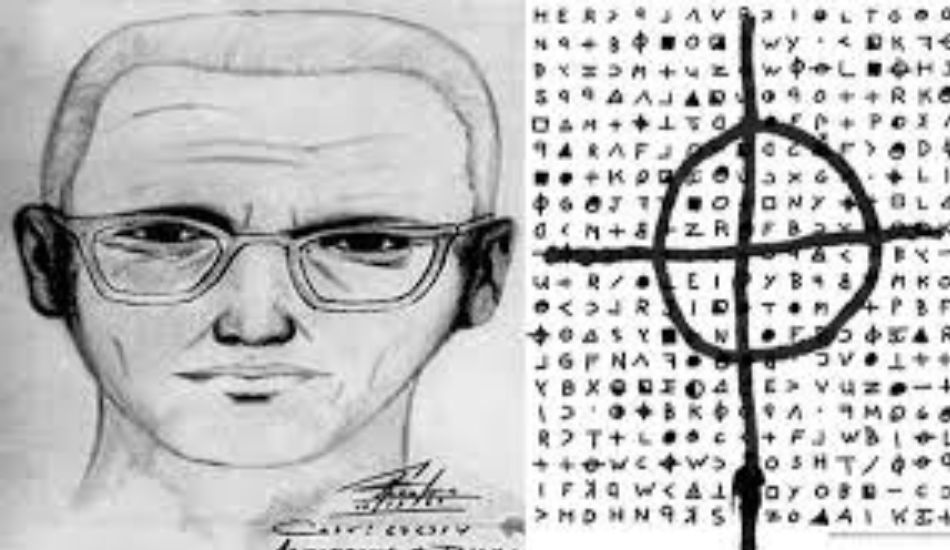
One of the most haunting legacies of the Zodiac is his symbol: a circle with a crosshair (a “+” inside a circle).
He often signed his letters with this symbol, making it his calling card in communications with newspapers and police.
The symbol has become an indelible icon in pop culture, associated with mystery, fear, and the idea of an unseen hunter.
Why Is He Called the “Zodiac Killer”?
The name “Zodiac” was chosen by the killer himself. In his letters to newspapers, he signed off as “Zodiac.”
He may have used “Zodiac” as a kind of branding — cultivating a terrifying persona in his own taunting communications.
The astrological connotation of “Zodiac” added to the mystique: it felt ominous, symbolic, and cryptic, perfectly matching his cryptograms and theatrical threats.
Zodiac Killer Letters & Ciphers
One of the most infamous parts of the Zodiac case is his correspondence:
He sent multiple letters to local newspapers and police, often taunting them and demanding publication.
He embedded ciphers (encrypted messages) in many of these letters. Four famous ciphers are associated with him — not all are solved.
Famous ciphers:
Z408 cipher: an early cipher sent in parts to three newspapers; it was solved shortly after being sent.
Z340 cipher: a major cipher, cracked decades later by codebreakers, revealing some of his chilling messages.
Even after decoding, some letters remain unsolved, and parts of his messages — including threats — continue to puzzle experts.
Zodiac Killer Identity: Suspects & Theories
Despite decades of investigation, no one has been officially convicted as the Zodiac Killer. However, several suspects have dominated the conversation:
Arthur Leigh Allen
Perhaps the most well-known suspect; Allen was a former school teacher, Navy veteran, and cryptography enthusiast.
He owned a Zodiac-brand wristwatch — the same symbol the killer used.
Some of his former acquaintances alleged that Allen confessed details of the murders, but no conclusive forensic proof has tied him to the crimes.
Other Theories
Over the years, cold case investigators and amateur sleuths have proposed multiple alternate suspects.
Some believe the Zodiac may have had psychological motivations rather than purely homicidal ones, due to the theatrical letters and cryptograms.
The case remains officially unsolved, which continues to fuel speculation, books, documentaries, and crime‑scene re-investigations.
Zodiac Killer in Books
One of the central works in the Zodiac Killer legend is:
Zodiac (1986) by Robert Graysmith, a political cartoonist for a San Francisco newspaper.
Graysmith became obsessed with the case, collecting letters, studying the cryptograms, and eventually publishing his research over many years.
He later wrote Zodiac Unmasked, diving deeper into suspects, codes, and possible motives.
Graysmith’s books inspired major Hollywood adaptations and continue to be a cornerstone for amateur and professional Zodiac researchers.
Zodiac Killer in Film & Media
Movies
Zodiac (2007): Directed by David Fincher, starring Jake Gyllenhaal as Robert Graysmith. The film dramatizes Graysmith’s obsession with decoding Zodiac’s letters and uncovering his identity.
The Zodiac Killer (1971): A fictional slasher film loosely based on the real murders.
Netflix / TV
This Is the Zodiac Speaking: A 2024 Netflix documentary series that explores new evidence, interviews with key witnesses, and deeper scrutiny of Arthur Leigh Allen — the prime suspect.
The docuseries includes never-before-seen archival footage, personal testimonies, and dramatic interviews that re-examine the case.
Has the Zodiac Killer Case Been Solved?
Officially, no — the Zodiac Killer is still unidentified.
Some ciphers have been solved, but not all.
The Netflix docuseries brought renewed attention, but however compelling the circumstantial evidence, no legal conviction has resulted.
The FBI and local law enforcement have never closed the case in a way that definitively names the Zodiac as any one person.
Why the Mystery Endures
The fascination with the Zodiac Killer stems from several factors:
Psychological Horror: He wasn’t just a killer — he was a taunting, communicating monster, using letters and codes to own the narrative.
Incomplete Evidence: With only some ciphers solved and no definitive identity, the case remains a puzzle rather than a closed file.
Cultural Impact: Books, films, and TV shows keep the story alive for new generations.
Iconic Symbol: The crosshair symbol remains chilling and universally recognized.
Citizen Sleuths: Amateur investigators and true crime fans continue to analyze letters, suspects, and crime scenes, keeping the case in public discourse.
Conclusion
The Zodiac Killer represents a dark intersection of violence, cryptic communication, and psychological manipulation. Despite decades of investigation and cultural fascination, his motive remains unclear, his identity unresolved, and his legacy permanently imprinted in American true crime lore. He claimed 37 victims, but only 7 are confirmed, and his reign of terror, from 1968 to 1969, involved a chilling mix of firearms and knife attacks. Sent by the Federal Bureau of Investigation and local police, the case has inspired books, blockbuster films, and a compelling Netflix documentary, yet still offers no final answer.
Perhaps that’s part of the Zodiac’s power: he became more than a killer — he became a riddle. And until a definitive solution appears, his story will continue to haunt curious minds and crime historians alike.
For more unsolved mysteries, true crime analyses, and deep dives, visit Thegoted.com.