
Rudolph Hall: A Brutalist Landmark That Redefined Yale’s Architectural Identity
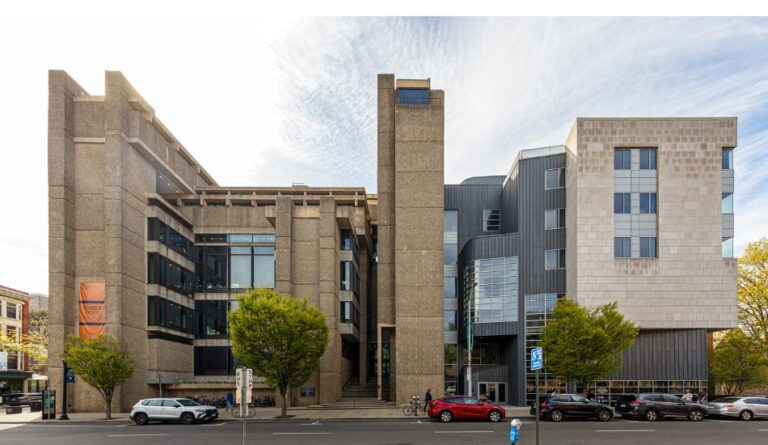
If you’ve ever walked through Yale University’s historic campus, one building stands out instantly—not because it blends in, but because it refuses to. That building is Rudolph Hall, originally known as the Yale Art & Architecture Building. With its raw concrete skin, dizzying interior levels, and iconic brutalist character, it remains one of the most influential architectural works of the 20th century.
This article explores the history, design, controversies, case study insights, Yale architecture style, Paul Rudolph’s vision, and even the confusion around Rudolph Hall TSU and Delurey Hall. We’ll also connect its legacy to contemporaries like Cedric Price’s Fun Palace (1964) and the broader Brutalist movement.
The Origin of Rudolph Hall
Completed in 1963, Rudolph Hall was designed by Paul Rudolph, who served as the Chair of Yale’s Department of Architecture from 1958 to 1965. At the time of its completion, the building was considered groundbreaking—a bold departure from the Gothic Revival architecture that dominates Yale.
The Address
Rudolph Hall officially stands at:
180 York Street, New Haven, Connecticut – 06511
From the moment it opened, the building signaled a new era in American academic architecture. It wasn’t trying to be polite, modest, or traditional. It was meant to challenge thinking—visually, spatially, and intellectually.
Yale Architecture Style: The Brutalist Turn
Rudolph Hall was one of the earliest and purest expressions of Brutalist architecture in the United States. Brutalism, derived from the French term béton brut (raw concrete), emphasizes:
exposed materials
monumental forms
geometric massing
functional expression
raw, unadorned surfaces
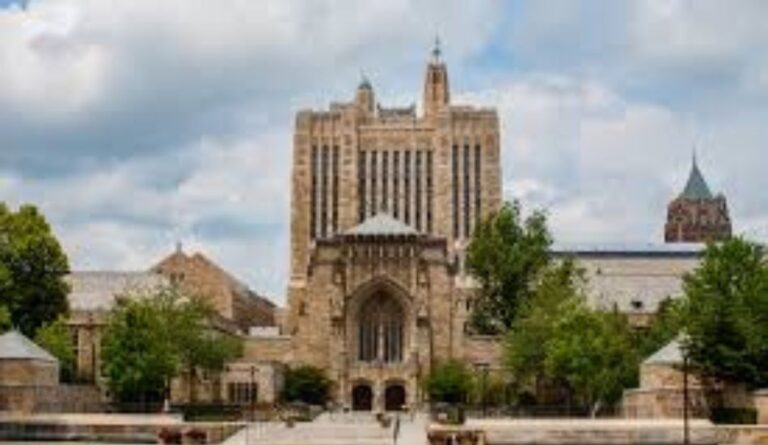
Unlike Yale’s Collegiate Gothic masterpieces such as Harkness Tower or Sterling Library, Rudolph Hall was a radical contrast. Its bush-hammered concrete texture, often described as “corduroy,” became its visual signature.
Inside, the building contains over 30 different levels, creating overlapping spaces, dramatic shadows, and perspectives that blur the boundaries between rooms and floors. This was intentional—Rudolph wanted students in the building to feel connected, not isolated.
Paul Rudolph: The Visionary Behind the Structure
Paul Rudolph (1918–1997) was known for his sculptural mastery of space. Before Yale, he had already built a reputation through the Sarasota School of Architecture. But it was at Yale where he honed his mature Brutalist style.
Rudolph believed architecture should:
enhance creativity
create dynamic interaction
push users to explore
The Yale school Art & Architecture Building became his manifesto. It embodied the complexity, boldness, and spatial choreography that Rudolph believed represented the future of architectural design.
His influence rippled across architectural education worldwide, making this building more than a structure—it became a teaching tool.
A Building Born Controversial
From the moment it opened, Rudolph Hall split opinion in the architectural world.
Praise
The New York Times architecture critic Ada Louise Huxtable called it:
“A spectacular tour de force.”
Students admired its artistic ambition, its maze-like structure, and its audacity.
Criticism
Others found it overwhelming. British historian Nikolaus Pevsner famously dismissed it as:
“Oppressively monumental.”
The building also suffered from practical issues—narrow corridors, tricky circulation, and heating challenges due to its massive concrete surfaces. Despite this, it quickly became a cultural and architectural icon.
The 1969 Fire and Later Modifications
A fire severely damaged the building in June 1969, destroying parts of the upper floors and internal finishes. Although the cause was never fully confirmed, the incident became part of the building’s troubled legend.
Following the fire:
interior spaces were reconfigured
modern building systems were added
some original design elements were removed
Over the years, these modifications altered Rudolph’s pure vision until Yale undertook a bold restoration decades later.
The 2008 Renovation and Revival
In 2008, a massive restoration effort led by Gwathmey Siegel & Associates, headed by Charles Gwathmey (a former student of Rudolph), brought the building back to life.
What the renovation achieved
restored original concrete textures
reopened long-closed vertical connections
upgraded lighting and ventilation
revitalized design studios
added new spaces, including the Loria Center and Haas Arts Library
In the same year, Yale officially renamed the building Paul Rudolph Hall, honoring its original creator.
The building eventually received preservation awards, proving how far public perception had shifted from controversy to appreciation.
Rudolph Hall as a Case Study in Architecture
Today, Rudolph Hall is used globally as a case study for:
1. Brutalist aesthetics
Its strong visual language makes it a textbook example of mid-century Brutalism.
2. Spatial complexity
The internal stacking of 30+ levels is studied in architecture schools worldwide.
3. Design pedagogy
Rudolph designed it to shape how students think and interact—not just where they study.
4. Restoration ethics
The building’s renovation is considered a model for preserving Brutalist structures without erasing history.
5. Material experimentation
Its bush-hammered concrete façade is uniquely crafted and often replicated in architectural exercises.
Rudolph Hall remains not just a building but a laboratory for ideas.
Connecting Rudolph Hall to Cedric Price’s Fun Palace (1964)
While Cedric Price’s Fun Palace (unbuilt, 1964) is very different from Rudolph Hall physically, both projects belong to the same era of post-war experimentation.
Similarities
both challenged conventional spatial thinking
both inspired generations of students
both emphasized flexibility and interaction
both became icons in architectural discourse
The Fun Palace was a radical experiment in adaptability, whereas Rudolph Hall was a radical experiment in spatial complexity. Together, they reflect an era when architecture was exploring new possibilities, free from classical constraints.
Rudolph Hall TSU vs Yale’s Rudolph Hall — Clearing Confusion
Many people mistakenly assume that Rudolph Hall at Tennessee State University (TSU) is related to Paul Rudolph or Yale’s building. In reality:
TSU’s Rudolph Hall is a student residence hall, not an academic building.
It has no architectural connection to Paul Rudolph.
It is not designed in a Brutalist style, nor does it share design philosophy with Yale’s hall.
Why the confusion?
The name similarity and the term “Hall” cause people to mix them up, especially in search queries.
For architectural writing or academic discussion, it’s important to distinguish:
Rudolph Hall (Yale) — a Brutalist masterpiece
Rudolph Hall (TSU) — a dormitory facility
What About Delurey Hall?
Another term that appears alongside searches for Rudolph Hall is Delurey Hall, but:
There is no known connection between Delurey Hall and Paul Rudolph.
It is not located at Yale.
It does not relate to Brutalism or the Yale Art & Architecture Building.
Delurey Hall seems to be an unrelated structure (sometimes referenced in dorm listings or regional facilities), but it has no architectural or historical overlap with Rudolph Hall.
Rudolph Hall’s Place in Brutalist Architecture
Brutalism has come full circle—from admiration, to widespread criticism, and back to being rediscovered by scholars, designers, and students.
Rudolph Hall embodies what Brutalism aimed to achieve:
honest materiality
bold sculptural forms
purposeful complexity
emphasis on social and educational functions
Today, it stands proudly among the world’s most respected Brutalist works, alongside:
Boston City Hall
Habitat 67
Geisel Library
Barbican Estate
Its influence extends across continents as architects revisit the power of concrete and monumental space.
Why Rudolph Hall Still Matters Today
Despite initial criticism, Rudolph Hal remains one of America’s most studied academic buildings. Its influence is felt not only in architecture schools but in preservation debates, design studios, and conversations about campus architecture.
It reminds us that architecture doesn’t need to be universally loved to be meaningful. Sometimes, the buildings that challenge us the most become the ones that teach us the most.
Rudolph Hall is one such building—a bold experiment that continues to inspire.
Conclusion
Rudolph Hal stands as a symbol of architectural courage—a building that challenged Yale’s traditions, redefined Brutalism in America, and embodied the creative spirit of Paul Rudolph. From its iconic concrete form to its complicated internal structure, it continues to provoke thought and inspire new generations of designers.
As debates about Brutalism, restoration, and architectural history continue, Rudolph Hall remains a milestone worth understanding and preserving.
This article is published on Thegoted.com, bringing you detailed insights into iconic architecture and design history.