
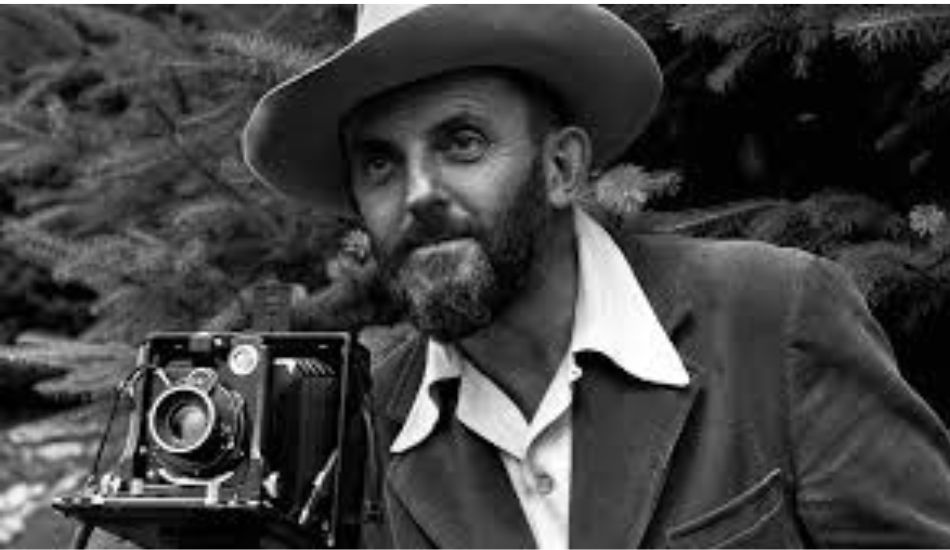
Photographer Ansel Adams: Legacy, Life, and the Art of Capturing Nature
Ansel Easton Adams is a name that stands tall in the world of photography. His images—sharp, detailed, and deeply connected to nature—continue to shape how the world views landscape photography. While many photographers have documented nature, very few have done so with the precision, passion, and environmental responsibility that defined Ansel Adams’ work. His photographs are more than images; they are a blend of artistic mastery and technical innovation.
This in-depth article explores who Ansel Adams was, his age and birthday, education, how he got into photography, his famous photos, prints, style, books, and awards. It also highlights key facts about his family, life, and legacy, concluding with how he became one of the most influential photographers of the 20th century.
Who Is Ansel Adams? The Life of a Legendary Photographer
Ansel Easton Adams was born on February 20, 1902, in San Francisco, California, to Charles Hitchcock Adams and Olive Bray Adams. He grew up near the magnificent coastal landscapes of California, and this proximity to nature shaped his creative path from a very young age.
Adams is best known as an American landscape photographer, environmentalist, and teacher. His crisp black-and-white images, particularly of the American West, remain some of the most iconic landscape photographs ever created. Adams’ legacy is not limited to photography alone—he was also a major voice in the movement to protect America’s natural ecosystems and national parks.
Ansel Adams Age, Birthday & Early Years
Born: February 20, 1902
Died: April 22, 1984, at age 82
Birthplace: San Francisco, California
Adams grew up during a period of immense cultural and technological change. As a child, he survived the 1906 San Francisco earthquake, which left a lasting impression on him. The earthquake threw him face-first into a garden wall, breaking his nose—a physical feature he carried for the rest of his life.
Although he had a turbulent childhood and struggled in formal school settings, these early experiences influenced his focus, discipline, and eventual dedication to the arts.
Ansel Adams’ Education: A Unique Path to Artistic Mastery
Adams did not follow a traditional educational route. Because of behavioral challenges and difficulties adapting to structured classroom environments, his family chose to homeschool him.
His early education included:
1. Home-Schooling
He was taught subjects including reading, writing, mathematics, and basic sciences by his father and private tutors. Although his formal schooling was unconventional, it did not hinder his intellectual development.
2. Music Training
Before photography, Adams’ primary passion was music. He studied piano seriously and considered a career as a concert pianist. Music discipline shaped his sense of structure, timing, and emotional expression—qualities that later influenced his photography.
3. Self-Taught Photographer
Adams immersed himself in:
Photography books
Camera clubs
Darkroom experimentation
Learning exposure, composition, and printing techniques
His photographic education came from practical experience, experimentation, and guidance from fellow photographers in California.
How Did Ansel Adams Get Into Photography?
Adams first encountered photography in 1916, when his parents gifted him a Kodak Brownie camera during a family trip to Yosemite National Park. This moment changed his life forever.
He became fascinated with:
Mountain landscapes
The play of light on rock formations
The clouds, shadows, valleys, and textures of nature
He returned to Yosemite every year after that first trip, capturing its majestic peaks and raw beauty through his lens. His early photos were simple, but they showcased extraordinary potential. Adams later joined the Sierra Club, where he worked as a caretaker and used his position to explore wilderness landscapes extensively.
By the 1920s, photography had become his chosen path—he shifted from music to full-time photography.
When Did Ansel Adams Start Photography Professionally?
Adams began taking photographs in 1916, but he became serious about it between 1921–1923. By 1927, he produced the landmark photograph “Monolith, The Face of Half Dome”, which marked his emergence as a brilliant landscape photographer.
In the 1930s, Adams became one of the founders of Group f/64, a movement aimed at promoting sharp, clean, and pure photography as a fine art. This collective included other greats like:
Edward Weston
Imogen Cunningham
Willard Van Dyke
This period solidified his artistic direction and technical precision.
Ansel Adams Photography Style: Precision, Purity & Powerful Landscapes
Adams’ style is characterized by:
1. Perfect Sharpness and Detail
He rejected soft-focus photography. Instead, he preferred crisp, clear images that captured every texture of rocks, trees, and mountains.
2. Dramatic Use of Light
His photos show intense contrasts:
Bright whites
Deep blacks
Rich midtones
3. The Zone System
Adams co-created the Zone System, a method to control exposure and development to produce the exact tones he envisioned.
4. Deep Connection to Nature
His photos were expressions of:
Environmental respect
Wilderness preservation
Emotional connection to landscapes
5. Large Format Cameras
He used large-format cameras to achieve unmatched sharpness and clarity.
Adams was more than a photographer—he was a visual storyteller who captured nature’s beauty with unmatched technical mastery.
Ansel Adams Paintings vs. Photographs
It is important to clarify that Ansel Adams was not a painter, though some people mistakenly refer to his photographs as “paintings” due to their artistic depth and visual beauty. His medium was strictly photography, especially black-and-white large-format prints.
His images have such artistic composition and tonal richness that people often describe them as “painterly,” but Adams never produced traditional paintings.
Ansel Adams Prints and Famous Photos
Adams created many famous photographs that define landscape art today. Some of his most renowned works include:
“Moonrise, Hernandez, New Mexico” (1941)
“Monolith, The Face of Half Dome” (1927)
“Clearing Winter Storm”
“The Tetons and the Snake River”
“Yosemite Valley, Winter”
“El Capitan, Winter Sunrise”
His prints became highly collectible art pieces, often selling for thousands of dollars. He produced museum-quality photographic prints that still circulate in exhibitions around the world.
Ansel Adams Books: A Literary and Artistic Legacy
Adams was not only a photographer—he was also an influential author. His books covered both artistic philosophy and technical guidance.
Major Books by Ansel Adams:
The Camera
The Negative
The Print
My Camera in the National Parks
Yosemite and the Range of Light
Natural-Light Photography
Examples: The Making of 40 Photographs
The Portfolios of Ansel Adams
These publications shaped the foundations of modern photography education.
Family Life: Spouse and Children
Spouse: Virginia Best, whom he married in 1928
Marriage Duration: 1928–1984 (until his death)
Children:
Anne Adams
Michael Adams
Virginia Best played a significant role in Adams’ life. Her family owned Best’s Studio in Yosemite, which became an early base for his photographic work.
Awards & Honors: Recognizing a Lifelong Impact
Ansel Adams received many prestigious awards throughout his career, including:
Presidential Medal of Freedom (1980) – one of the highest civilian honors in the United States
Hasselblad Award – celebrating outstanding achievement in photography
His commitment to environmental protection also earned him recognition from conservation groups and national parks associations.
Ansel Adams Death and Final Years
Ansel Adams died on April 22, 1984, in Monterey, California, at 82 years old. His passing marked the end of an era, but his influence continues stronger than ever.
After his death, several wilderness areas, museums, and photography institutions honored him by naming sections in his memory.
The Legacy of Ansel Adams: A Photographer Who Preserved the Soul of Nature
Ansel Adams was more than a photographer. His work:
Helped protect America’s national parks
Elevated photography to fine art status
Influenced generations of photographers
Created standards in photographic technique
Brought attention to environmental conservation
His black-and-white images still feel alive, powerful, and timeless. They remind us not only of nature’s beauty but also of humanity’s responsibility to protect it.
In celebrating Adams and his life’s dedication, we recognize that photography has the power to inspire, educate, and create lasting change.
For more insightful articles like this, visit my blog: Thegoted.com.