Eleanor Callahan: Life, Legacy, and the Woman Behind an Iconic Photographer’s Lens
Eleanor Callahan is a name that quietly yet powerfully echoes through the history of twentieth-century American photography. While she herself was not a photographer, painter, writer, or public figure, her presence became central to one of the most important photographic archives ever produced by a single artist. She was the wife, partner, and lifelong muse of renowned photographer Harry Callahan, whose images of Eleanor helped shape the direction of modern photography.
Yet behind the iconic portraits is a real woman with her own story — a story of devotion, partnership, modesty, family, and quiet influence. This article explores who Eleanor Callahan was, her age and birthday, her education, her earlier life, her marriage to Harry Callahan, her role in his career, her children, and what is known about her parents.
This is the complete story of the woman behind the lens: Eleanor Annetta Knapp Callahan.
Who Was Eleanor Callahan?
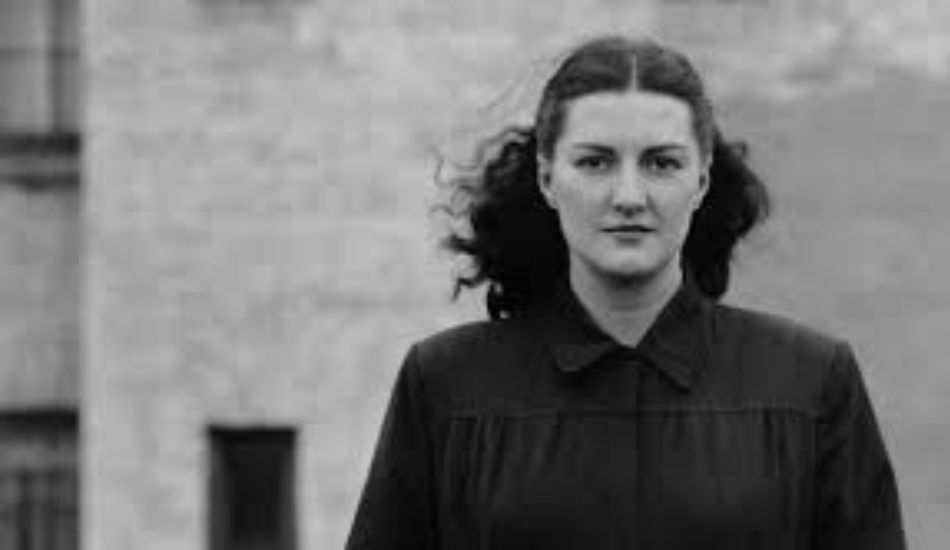
Eleanor Callahan, born Eleanor Annetta Knapp, became one of the most photographed women of the twentieth century — not because she lived her life on runways or in front of fashion cameras, but because she was the devoted companion and artistic muse of Harry Callahan, one of America’s most influential photographers.
She did not seek fame. She did not pursue interviews, public appearances, or acclaim. Instead, her significance emerged through the quiet, intimate, honest photographs captured by her husband across decades.
Eleanor became the emotional and physical center of Harry’s artistic journey — a partnership that spanned 63 years of marriage and over half a century of artistic collaboration. Through him, she became a face of modern photography, even as she chose a private life outside the gaze of celebrity.
Eleanor Callahan Age and Birthday
Eleanor Callahan was born on June 13, 1916, in Royal Oak, Michigan, a suburb of Detroit.
She passed away on February 28, 2012, at the age of 95.
Her life spanned nearly a century — a period that saw the Great Depression, world wars, radical transformations in art, politics, and technology, and the rise of photography as a globally respected art form. Through all of this, Eleanor remained consistently grounded and committed to her family.
Early Life and Education of Eleanor Callahan
Eleanor grew up in Michigan during an era marked by economic uncertainty and rapid industrial growth. Her early years were spent in a modest household, shaped by traditional values and a quiet, simple lifestyle.
Although detailed information about her childhood is sparse — fitting for a woman who lived most of her life away from public attention — what is known is that she completed high school but did not pursue college.
Instead, like many young women of the 1930s, Eleanor entered the workforce immediately. After graduating, she took a job as a secretary, a role that was both practical and respected at the time.
This decision would alter the course of her life forever.
Where Did Eleanor Callahan Work?
Her early employment included secretarial work at Chrysler Corporation, one of America’s most prominent automobile companies. It was there that she met a quiet, introspective, and ambitious young man who would become her lifelong partner: Harry Callahan.
Love Story: Marriage to Harry Callahan (m. 1936–1999)
In 1936, at just 20 years old, Eleanor Knapp married Harry Morey Callahan, beginning a marriage that would last until Harry’s death in 1999. Their marriage spanned 63 years, making it one of the more enduring relationships in the world of modern art.
Their bond was a partnership built on trust, mutual respect, and a shared love for simplicity.
While Harry pursued his passion for photography, Eleanor became the emotional anchor of the household — and eventually, the central figure of his life’s work.
Eleanor Callahan’s Role in Harry Callahan’s Photography Career
Eleanor’s significance in art history is tied directly to her role as Harry’s muse. From the late 1940s to the early 1960s especially, Harry photographed her extensively:
Portraits in natural light
Nude studies
Images of her in city landscapes
Photos of her with their daughter
Everyday domestic scenes
Meditative and minimalist compositions
These images were not glamorous or staged in a commercial sense. Instead, they were deeply personal — intimate studies of a woman whom Harry admired, loved, and viewed as the foundation of his artistic inspiration.
Eleanor’s presence helped Harry explore:
Composition
Light
Form
Identity
Domesticity
The female figure in art
She was comfortable in front of the camera, trusting Harry’s vision even when the images were experimental or unconventional. Eleanor once mentioned that she rarely objected and understood how deeply the process mattered to her husband.
In many ways, she was the heart of his artistic identity.
A Quiet Strength Behind the Camera
It is important to understand that Eleanor did not step into this role seeking recognition. She was private, soft-spoken, and modest.
Yet her image helped shape modern photography. Harry’s photos of Eleanor became:
Exhibited in major museums
Printed in books
Studied by photography students
Celebrated as pioneering works of intimate art
Through these images, Eleanor became one of the most recognizable muses in modern American photography — even though she personally remained out of the spotlight.
Her gift to Harry was her presence, her trust, and her willingness to let their ordinary, real life become art.
Eleanor Callahan’s Children
Eleanor and Harry welcomed their daughter, Barbara Callahan, in 1950.
Barbara also appeared in many of Harry’s photographs, especially during her childhood. These images, often showing mother and daughter together, remain some of the most emotionally resonant in Harry Callahan’s body of work.
Barbara later married and became Barbara Callahan Hollinger, and Eleanor was survived by both her daughter and two granddaughters.
Eleanor Callahan’s Parents
Information on Eleanor Callahan’s parents is limited, as she lived a very private life and historical documentation is sparse.
However, available sources note that:
Her father worked as an electrician
Her mother was a homemaker
This simple, working-class upbringing shaped Eleanor’s grounded personality. Though she later became the subject of high-art photography displayed in major museums, she always maintained a modest, unassuming demeanor.
Life After Harry Callahan’s Passing
Harry Callahan passed away in 1999 at the age of 87. Their partnership had spanned over six decades, and his passing marked the end of a remarkable artistic era.
Eleanor lived quietly in her later years, surrounded by family, loved ones, and the legacy of photographs that defined her place in art history.
She passed away on February 28, 2012, at 95.
Why Eleanor Callahan Matters Today
Eleanor Callahan’s importance lies not in public achievements but in her contribution to modern photography through partnership, vulnerability, and authenticity.
She represents:
The intimate power of domestic subjects in fine art
The essential role of a muse in an artist’s creative life
The value of everyday human connection
The beauty of a lifelong artistic collaboration
Her willingness to be seen — truly seen — shaped the visual language of 20th-century art.
Final Thoughts — The Legacy of Eleanor Callahan
Eleanor Callahan was more than a muse. She was a wife, mother, partner, and quiet creative force whose influence helped shape the career of one of America’s photographic greats. Her life reminds us that art is often built not only on the skill of the artist but also on the trust, presence, and humanity of the people who stand beside them.
Through Harry’s lens, Eleanor became timeless — an emblem of intimacy, beauty, and devotion captured across decades.
In remembering her, we remember not only a single individual but an entire chapter of modern art history.
Article Published for: Thegoted.com