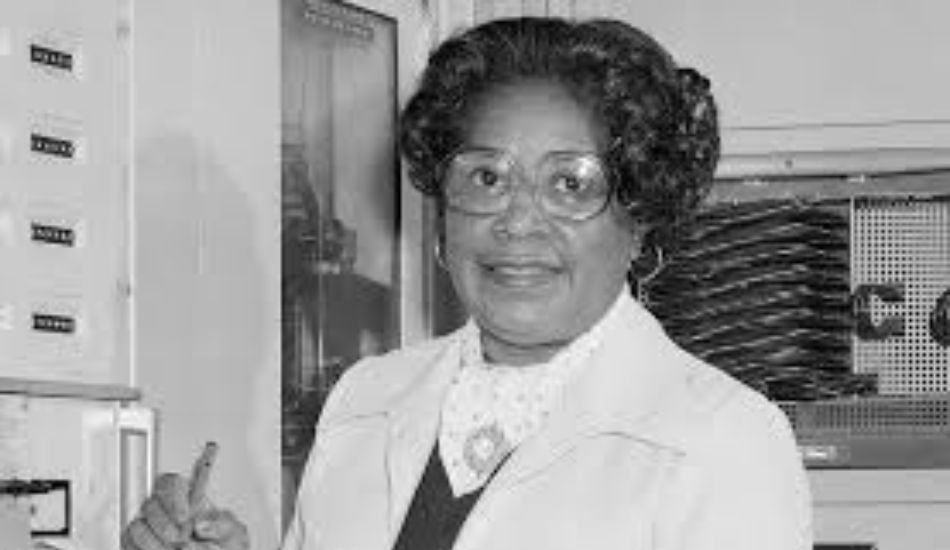
Dorothy Vaughan: The Pioneering Mathematician Who Helped Put America in Space
Dorothy Vaughan was a remarkable mathematician and visionary whose work at NASA — and its predecessor, NACA — paved the way for modern space exploration. Often overlooked in history, Vaughan broke racial and gender barriers during the 1940s, 50s, and 60s, leading a team of African-American women mathematicians known as the “West Area Computers.” Her life is a testament to perseverance, brilliance, and leadership, immortalized in Margot Lee Shetterly’s book Hidden Figures and the 2016 film adaptation in which she was portrayed by Octavia Spencer.
Early Life and Education
Dorothy Johnson, later known as Dorothy Vaughan, was born on September 20, 1910, in Kansas City, Missouri, to Leonard Johnson and Annie Johnson. Her family later moved to West Virginia, where Dorothy grew up in a segregated society but excelled academically.
She attended Beechurst High School, graduating as valedictorian, and continued her education at Wilberforce University, one of the oldest historically Black universities in the United States. There, she earned a Bachelor’s degree in Mathematics in 1929. Her academic excellence laid the foundation for a career that would eventually change the course of space exploration.
After graduation, Vaughan became a high school mathematics teacher, demonstrating her early passion for numbers and mentoring. This role honed her skills in problem-solving and leadership, preparing her for the groundbreaking work she would undertake at NASA.
Career: From Human Computer to NASA Programmer
Joining NACA and the West Area Computers
In December 1943, during World War II, Dorothy Vaughan began her career at the National Advisory Committee for Aeronautics (NACA), working at the Langley Memorial Aeronautical Laboratory in Hampton, Virginia. She joined a segregated group of African-American women mathematicians called the West Area Computers, responsible for performing complex calculations by hand. These “human computers” provided vital data for engineers, including flight dynamics, aeronautics research, and early rocket testing.
Despite facing institutionalized racial segregation — including separate bathrooms and cafeterias — Vaughan and her colleagues produced exceptional work, earning the respect of engineers and scientists at NACA. Her meticulous calculations and dedication quickly made her an invaluable team member.
Becoming the First African-American Female Supervisor at NACA
In 1949, Dorothy Vaughan achieved a historic milestone: she was promoted to head of the West Area Computers, becoming the first African-American female supervisor at NACA. In this role, she managed a team of mathematicians, assigning tasks, reviewing calculations, and mentoring her staff. Her leadership skills helped her team excel despite the obstacles imposed by racial and gender discrimination.
Vaughan’s position was groundbreaking not only for African-American women but also for women in STEM fields generally, showing that leadership, intelligence, and dedication could overcome societal limitations.
Transition to NASA and Computer Programming
When NACA transitioned to the National Aeronautics and Space Administration (NASA) in 1958, segregation policies were abolished, and Vaughan’s team became part of NASA’s Analysis and Computation Division (ACD). As NASA moved towards electronic computing, Vaughan recognized the need to adapt. She taught herself the programming language FORTRAN, a skill that allowed her to remain indispensable in the era of digital computing.
Her expertise in FORTRAN contributed to major projects, including the Scout Launch Vehicle Program, which was vital to satellite launches and early space missions. Dorothy Vaughan worked at NASA for nearly three decades, retiring in 1971 after a career that spanned both manual and digital computation, bridging a critical era in space exploration.
Dorothy Vaughan in Literature and Film
Vaughan’s life story remained largely unknown until the publication of Margot Lee Shetterly’s book Hidden Figures. The book documented the lives of Vaughan, Katherine Johnson, Mary Jackson, and other African-American women mathematicians whose work was critical to NASA’s success.
The 2016 film adaptation, Hidden Figures, brought Vaughan to the global stage. Portrayed by Octavia Spencer, the film highlighted her leadership, intelligence, and perseverance, inspiring audiences worldwide and bringing long-overdue recognition to her contributions.
Personal Life: Family and Marriage
In 1932, Dorothy Johnson married Howard Vaughan, and the couple had six children: Ann, Maida, Leonard, Kenneth, Michael, and Donald. Her husband passed away in 1955. Despite the demands of a large family and the challenges of a segregated workplace, Vaughan balanced her professional responsibilities with dedication to her children and home life.
Later Years and Death
Dorothy Vaughan retired from NASA in 1971, leaving behind a legacy of excellence, mentorship, and groundbreaking achievement. She passed away on November 10, 2008, in Hampton, Virginia, at the age of 98 years. Vaughan’s legacy was posthumously celebrated through awards, educational programs, and continued recognition in media, including film and literature.
Achievements and Legacy
Dorothy Vaughan’s life is remarkable for multiple reasons:
Breaking Barriers: She became the first African-American female supervisor at NACA, defying racial and gender barriers.
Mathematical Expertise: Vaughan was an expert “human computer” and later a FORTRAN programmer, contributing to early space missions.
Mentorship and Leadership: She guided and supported her team, ensuring their work received recognition and their skills adapted to the new era of computing.
Cultural Impact: Through Hidden Figures, Vaughan’s story inspires women and minorities to pursue careers in STEM, showing the power of determination and intelligence.
Vaughan’s life exemplifies resilience, brilliance, and the importance of recognizing unsung heroes in history.
Connection with Mary Jackson and Other NASA Pioneers
Dorothy Vaughan worked closely with Mary Jackson and Katherine Johnson, forming a trio of women whose work helped America win the space race. Jackson later became NASA’s first African-American female engineer, while Johnson’s calculations ensured the success of John Glenn’s orbital flight. Vaughan’s leadership helped these women thrive, making her an essential figure in the team’s collective success.
Cultural Recognition and Honors
Book: Hidden Figures by Margot Lee Shetterly
Film: Hidden Figures (2016), portrayed by Octavia Spencer
Legacy: Recognized for her leadership, contributions to NASA, and role in advancing women in STEM
Inspiration: Vaughan’s story is taught in schools, STEM programs, and public lectures worldwide
Her influence extends beyond NASA, serving as a role model for determination, intellect, and advocacy in the workplace.
Summary of Key Facts
Full Name: Dorothy Johnson Vaughan
Born: September 20, 1910, Kansas City, Missouri
Parents: Leonard Johnson, Annie Johnson
Education: B.A. in Mathematics, Wilberforce University, 1929
Spouse: Howard Vaughan (m. 1932; died 1955)
Children: Six — Ann, Maida, Leonard, Kenneth, Michael, Donald
Career: NACA/NASA mathematician, supervisor, FORTRAN programmer (1943–1971)
Death: November 10, 2008, Hampton, Virginia, age 98
Legacy: Highlighted in Hidden Figures (book and film), trailblazer for women in STEM
Conclusion
Dorothy Vaughan’s story is one of perseverance, intelligence, and groundbreaking achievement. From teaching mathematics to leading the West Area Computers and mastering early computer programming, she played a pivotal role in America’s space exploration history. Through the book Hidden Figures and its 2016 film adaptation, her contributions have finally received global recognition. Vaughan’s life is a reminder that determination, skill, and leadership can overcome systemic barriers and inspire generations to come.
For more inspiring stories of historical and cultural significance, visit Thegoted.com.