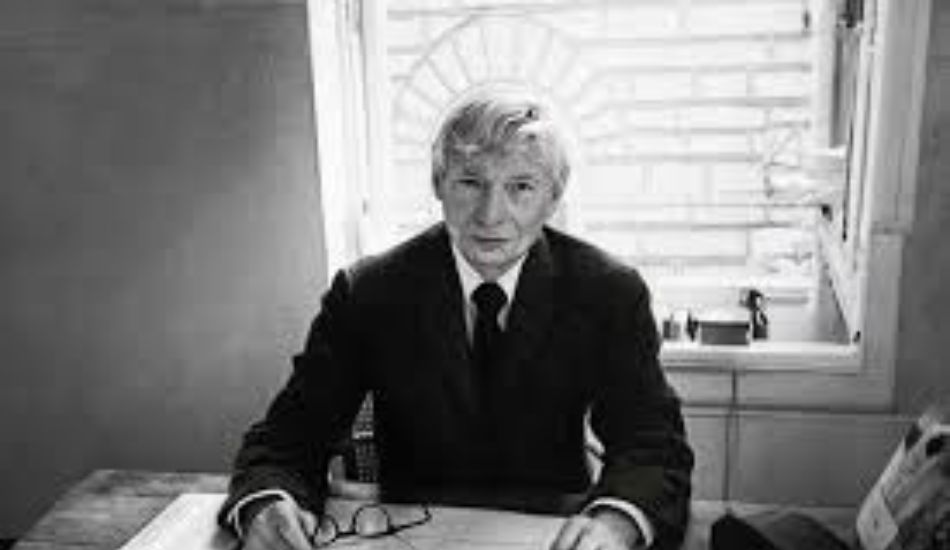
Louis Kahn: The Visionary Architect Who Redefined Modern Architecture
Louis Isadore Kahn, born on February 20, 1901, in Osel (now Saaremaa, Estonia), was a pioneering American architect whose work transformed the way we think about architecture. Emigrating to the United States as a child, Kahn grew up in Philadelphia, where he developed a fascination with structures, materials, and the interplay of light and space. Over his prolific career, he designed monumental buildings that combined raw material honesty with geometric purity, creating spaces that are as poetic as they are functional.
Early Life and Education
Kahn’s formative years in Philadelphia were influential in shaping his architectural perspective. He studied at the University of Pennsylvania, where he was exposed to classical architectural theories while also engaging with modernist principles. This duality—respecting classical order yet embracing modern materials—became a defining feature of his work.
Architectural Style of Louis Kahn
Kahn’s architectural style is often described as monumental, philosophical, and deeply humanistic. Several key elements define his approach:
Materiality and Structure: Kahn celebrated the inherent qualities of materials like brick, concrete, and stone. His buildings often reveal structural elements rather than hiding them, creating a sense of honesty and permanence.
Geometry and Form: He employed basic geometric forms—cubes, circles, and triangles—to organize space. This geometric clarity is evident in projects like the Salk Institute and Kimbell Art Museum.
Served vs. Servant Spaces: Kahn distinguished between primary “served” spaces (e.g., offices, laboratories) and secondary “servant” spaces (e.g., staircases, ducts), giving each structural and visual significance.
Light as a Medium: Natural light was central to his designs, creating dynamic interiors that changed throughout the day. Skylights, narrow windows, and strategically placed openings became trademarks of his work.
Spiritual Dimension: Many consider Kahn’s buildings to possess a spiritual or poetic quality, evoking contemplation and human scale despite their monumental forms.
Major Works of Louis Kahn
Kahn’s portfolio includes some of the most celebrated buildings of the 20th century. His projects spanned educational, civic, residential, and cultural spaces.
1. Salk Institute for Biological Studies, La Jolla, California
Completed in 1965, the Salk Institute remains Kahn’s most iconic work. The design features two parallel laboratory buildings framing a central courtyard with a narrow water channel leading to the Pacific Ocean. The use of travertine marble, concrete, and teak wood creates a serene environment conducive to research while emphasizing geometry, symmetry, and light.
2. Kimbell Art Museum, Fort Worth, Texas
Finished in 1972, the Kimbell Art Museum showcases Kahn’s mastery of natural light. Cycloid-vaulted ceilings diffuse sunlight, providing uniform illumination for artworks. The combination of concrete, travertine, and white oak results in a space that is monumental yet intimate.
3. National Assembly Building, Dhaka, Bangladesh
Constructed between 1962 and 1982, the National Assembly Building is Kahn’s most ambitious civic project. Its bold geometric forms and expressive use of concrete symbolize democratic ideals. Massive walls are pierced with circles, squares, and rectangles, creating dynamic spaces that reflect both utility and grandeur.
4. Richards Medical Research Laboratories, University of Pennsylvania
A breakthrough in laboratory design, this building exemplifies Kahn’s “served and servant spaces” concept. Distinct towers house utilities, labs, and offices, with structural elements exposed to articulate the building’s functional logic.
5. Phillips Exeter Academy Library, New Hampshire
This library is organized as concentric rings with outer reading carrels, middle book stacks, and a central atrium. The design maximizes spatial clarity while fostering an engaging academic environment. Brick and concrete combine to create both warmth and structural clarity.
6. Residential Projects
Fisher House, Hatboro, Pennsylvania: Features intersecting cubes of stone and wood, demonstrating Kahn’s geometric precision and material sensitivity.
Clever House, Cherry Hill, New Jersey: A sculptural residential project with pyramidal roof geometry, reflecting Kahn’s ability to translate monumental forms into domestic scale.
7. Yale Center for British Art, New Haven, Connecticut
One of Kahn’s later projects, the center emphasizes natural light, geometric order, and monumental clarity. It harmonizes with the surrounding campus while providing an exemplary display space for art collections.
Books and Writings on Louis Kahn
Several books and compilations document Kahn’s philosophy, sketches, and lectures:
What Will Be Has Always Been – a collection of his writings and reflections on architecture.
Louis Kahn: Essential Texts – presents essays and notes on his architectural approach.
Architectural monographs highlight his design processes, material explorations, and spatial concepts.
Film and Documentary
My Architect: A Son’s Journey (2003) – Directed by Nathaniel Kahn, Louis Kahn’s son, this documentary explores both Kahn’s architectural legacy and complex personal life. The film examines his major buildings, personal relationships, and the challenges of reconciling his professional and private worlds.
The documentary was nominated for the Academy Award for Best Documentary Feature and remains an essential resource for understanding Kahn’s life and work.
Death and Legacy
Louis Kahn passed away on March 17, 1974, in New York City at Penn Station. Despite his fame, he died relatively unknown to the public and with limited financial security. His architectural philosophy and monumental designs continue to influence architects globally. Kahn’s buildings are studied for their integration of light, material, geometry, and human experience. Universities, civic institutions, and architectural schools continue to teach his methods as foundational to modern architecture.
Louis Kahn House and Personal Life
Kahn lived and worked in various residences that reflected his architectural principles. The houses themselves were studies in geometric forms, material honesty, and spatial clarity.
His personal life was complex; he had multiple families concurrently, and his relationships often influenced his artistic and architectural vision.
Conclusion
Louis Kahn was more than an architect; he was a philosopher of space, material, and light. His buildings are monumental yet intimate, geometric yet humanistic, modern yet timeless. From the Salk Institute to the National Assembly in Dhaka, his work continues to inspire architects and designers around the world. His writings, buildings, and the documentary My Architect ensure that his legacy will endure for generations.
For more detailed insights into architecture and modern design, visit Thegoted.com.