Les Misérables (1998): A Complete Look at Bille August’s Epic Adaptation
Few stories carry the emotional weight, moral questioning, and human complexity of Victor Hugo’s timeless novel Les Misérables. Over the past century, filmmakers from around the world have attempted to capture the essence of Hugo’s 1862 literary epic. Among those attempts, Les Misérables (1998), directed by Bille August, occupies a special position. Released on May 1, 1998 (USA) and running for 2 hours 14 minutes, the film takes a non-musical, dramatic approach, focusing on raw performances, moral dilemmas, and character-driven storytelling rather than theatrical spectacle.
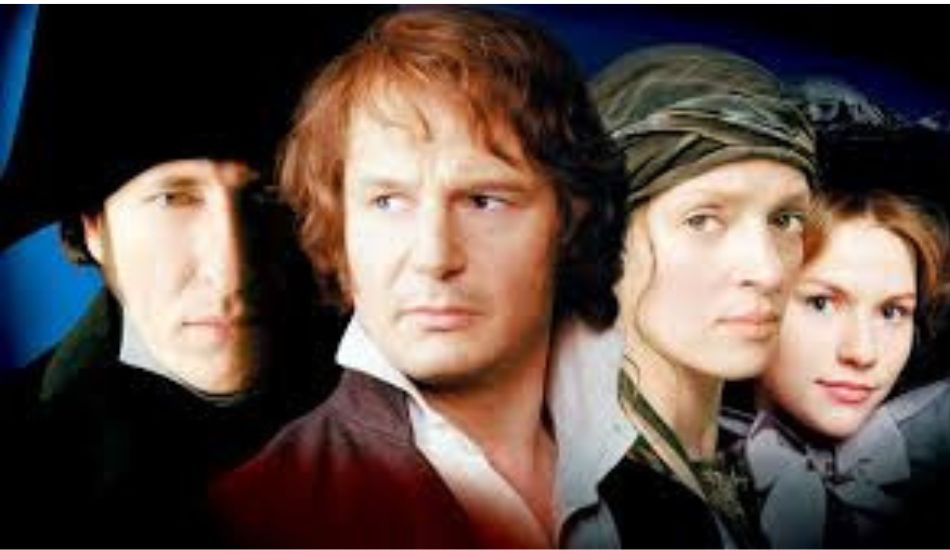
With a powerful cast led by Liam Neeson, Geoffrey Rush, Uma Thurman, and Claire Danes, the 1998 movie stands as a compelling and grounded adaptation of the classic story. While not as widely discussed today as the 2012 musical version, the film has earned respect for its realistic tone, emotional depth, and traditional cinematic craftsmanship. Whether viewers search for “Les Misérables 1998 full movie,” “Les Misérables 1998 cast,” or comparisons like “Les Misérables (1998 vs 2012),” this version remains a significant chapter in the history of Les Misérables on-screen.
This long-form article explores everything about the 1998 adaptation: the story, performances, themes, production, comparisons with other versions, availability on streaming platforms such as Netflix, and how it reflects the core of the Les Misérables book.
The Foundation: Adapting Victor Hugo’s 1862 Masterpiece
To appreciate the 1998 film, one must first understand the magnitude of its source material. Victor Hugo’s Les Misérables is a sweeping, nearly 1,500-page novel exploring justice, grace, poverty, revolution, and the human condition. Its narrative spans decades and examines France’s underclass during a turbulent period in the early 19th century.
However, the 1998 movie is not a direct recreation of every chapter. Instead, the filmmakers selected the most important emotional threads—Jean Valjean’s redemption, Javert’s obsession, Fantine’s suffering, and Cosette and Marius’s love story—while trimming subplots, characters, and historical digressions. For modern audiences, this streamlined approach provides a more accessible and digestible viewing experience, especially compared to the novel’s vast scope.
Plot Summary: A Story of Redemption and Pursuit
The Redemption of Jean Valjean
At the heart of the film is Jean Valjean, portrayed by Liam Neeson with immense emotional depth. Valjean begins as a hardened man who spent 19 years in prison for stealing a loaf of bread—a crime committed out of desperation. Marked by society and unable to find honest work, he is pushed toward bitterness until an unexpected act of mercy transforms his life.
The bishop’s forgiveness becomes a turning point, encouraging Valjean to reinvent himself and live morally. Years later, he becomes a successful mayor and factory owner, respected by many yet always haunted by his past.
Inspector Javert: The Man of Unyielding Law
Geoffrey Rush delivers a chilling performance as Inspector Javert, the embodiment of rigid law. For Javert, rules are absolute—there are no shades of gray, no room for mercy. His pursuit of Valjean is not fueled by hatred but by a firm belief that criminals can never change. This ideological conflict becomes one of the film’s defining tensions.
Fantine’s Tragedy and Cosette’s Rescue
Uma Thurman plays Fantine, a young mother forced into heartbreaking circumstances to provide for her daughter, Cosette. After losing her job, Fantine is drawn into poverty and eventually prostitution. Her suffering becomes a central moral challenge: Valjean promises to care for Cosette as Fantine dies, leading him to rescue the little girl from her abusive keepers, the Thénardiers.
Cosette, Marius, and the Tides of Revolution
In adulthood, Cosette (Claire Danes) falls in love with Marius, a young revolutionary. Their romance unfolds during the political unrest and barricades of the 1832 uprising. Though the film shortens many historical details, it captures the emotional intensity and youthful idealism that drive the students.
The Final Confrontation
Valjean must navigate danger, sacrifice, and moral choices as he protects Cosette and Marius, eventually saving Marius’s life. Javert’s worldview crumbles when Valjean shows him mercy—an act he cannot reconcile with his strict belief in the law. This leads to Javert’s tragic suicide, signaling the ultimate moral victory of compassion over rigid judgment.
The Cast: Performances that Elevate the Film
One of the movie’s greatest strengths is its cast, each actor bringing depth and humanity to their roles.
Liam Neeson as Jean Valjean
Neeson’s portrayal is emotional, layered, and believable. He captures Valjean’s physical strength, moral uncertainty, paternal warmth, and eventual spiritual transformation.
Geoffrey Rush as Inspector Javert
Rush offers a cold, methodical presence—almost frightening in his dedication to law and order. His rigid posture and piercing gaze reflect a man trapped within his own principles.
Uma Thurman as Fantine
Thurman’s fragile but fierce performance brings Fantine’s tragedy to life. Her suffering is depicted realistically, without excessive melodrama, making it more impactful.
Claire Danes as Cosette
Danes portrays Cosette with innocence and grace, but also independence—a slightly more assertive version compared to some other adaptations.
Supporting Cast
Hans Matheson shines as Marius, while smaller roles such as the Thénardiers add texture to the story.
Direction and Cinematography: A Realistic and Grounded Tone
Bille August, known for his elegant and emotionally rich films, directs Les Misérables (1998) with a focus on realism. Unlike the 2012 musical film, this version avoids theatricality and instead uses natural lighting, authentic period settings, and subtle performances.
The cinematography by Jörgen Persson captures historic France with muted colors and sweeping landscapes. The Prague locations double convincingly for 19th-century France, giving the film an atmospheric authenticity.
Comparing Adaptations: 1998 vs. 2012
Many viewers search for “Les Misérables (1998 vs 2012)”, and there are key differences worth noting.
Tone and Style
1998: A dramatic, non-musical, grounded take on the story.
2012: A grand, emotional musical adaptation filled with songs and spectacle.
Story Scope
1998: Streamlined narrative focusing on Valjean and Javert.
2012: More faithful to the musical version, covering more subplots and emotional beats.
Performances
Liam Neeson vs. Hugh Jackman
Geoffrey Rush vs. Russell Crowe
Uma Thurman vs. Anne Hathaway
Each version has its own tone and strengths, but the 1998 film appeals to viewers who prefer a more traditional cinematic storytelling style.
Connection to the Novel: What Was Changed?
The novel is enormous, so changes were inevitable. Key omissions include:
The extended Thénardier family story
The detailed depiction of the Parisian underworld
Hugo’s long historical digressions (like the Battle of Waterloo)
The extended ending involving Valjean’s final years
However, the essential themes—grace, sacrifice, justice vs. mercy—remain intact.
Availability: How to Watch Les Misérables (1998)
People often search for:
“Les Misérables 1998 Netflix”
“Les Misérables 1998 full movie free”
“Les Misérables 1998 full movie YouTube”
Netflix
The 1998 version has appeared on Netflix in certain regions, but availability varies over time.
YouTube / Free Platforms
The full movie is not officially available for free on YouTube. Any “free” uploads are often unauthorized or low quality.
Rent/Buy
The film can typically be rented or purchased through digital stores depending on region.
An Often Overlooked Adaptation with Lasting Power
Though sometimes overshadowed by the musical film or older classic versions (such as the famous Les Misérables old movie 1978 often referenced by fans), the 1998 adaptation has its own dedicated audience. Its greatest strengths lie in its powerful performances, serious tone, and faithful emotional interpretation of Hugo’s characters.
For viewers seeking the essence of Les Misérables without musical numbers, the 1998 version remains a compelling and dignified adaptation worth revisiting.
Conclusion
More than two decades after its release, Les Misérables (1998) continues to resonate with audiences who value character-driven drama, powerful performances, and faithful emotional storytelling. It may not be the flashiest or most complete adaptation, but it remains a thoughtful and profoundly human retelling of Hugo’s masterpiece.
If you’re exploring classic literature adaptations or searching for “Les Misérables book,” “1998 cast,” or “1998 vs 2012,” this film offers a unique, grounded approach that still holds emotional power today.
Article published by Thegoted.com