Ian McEwan Books in Order – A Complete Guide to His Literary Masterpieces
Few modern authors have shaped contemporary fiction as profoundly as Ian McEwan. His literary career spans decades, marked by psychological depth, bold themes, and unforgettable narratives. For readers seeking a structured path into his work, understanding the Ian McEwan books in order is essential. In this detailed guide, we present McEwan’s novels, short-story collections, screenplays, and notable nonfiction in chronological order—providing context, analysis, and insight into how his writing evolved into one of the most distinguished voices in modern literature.
Early Career: Short Stories That Heralded a Master (1970s)
First Love, Last Rites (1975)
McEwan’s debut short-story collection immediately established him as a boundary-pushing writer. These stories explore dark corners of human psychology, blending unsettling themes with lyrical prose. The book won the Somerset Maugham Award, signaling the arrival of an extraordinary talent.
In Between the Sheets (1978)
This second story collection continues McEwan’s exploration of taboo, intimacy, and the human subconscious. It cemented his reputation for fearless storytelling and psychological insight.
Early Novels: A New Voice in British Literature (1978–1987)
The Cement Garden (1978)
McEwan’s first novel tells the disturbing tale of four siblings coping with isolation after their parents’ deaths. Its bold narrative earned both controversy and acclaim, marking McEwan as a leading literary innovator.
The Comfort of Strangers (1981)
This short, atmospheric novel follows a couple on holiday as they encounter unsettling characters. Nominated for the Booker Prize, it showcases McEwan’s ability to blend suspense and psychological tension.
The Child in Time (1987)
A heartbreaking exploration of grief and time, this novel follows a couple after the disappearance of their daughter. It won the Whitbread Novel Award and remains one of McEwan’s most emotionally resonant works.
The 1990s: The Rise of a Literary Giant (1990–1999)
The Innocent (1990)
Set during the Cold War in Berlin, this espionage thriller blends romance, violence, and geopolitics. It reveals McEwan’s expanding narrative scope as he moves beyond psychological drama.
Black Dogs (1992)
A philosophical novel exploring ideological conflict, personal memory, and the shadows of European history. It is a reflective meditation on politics, trauma, and moral responsibility.
The Daydreamer (1994)
A departure into children’s literature, this novel captures the whimsical adventures of a young boy. It displays McEwan’s versatility and storytelling range.
Enduring Love (1997)
A psychological suspense novel about obsession and trauma, beginning with a dramatic balloon accident. It remains one of McEwan’s most gripping works and was later adapted into a film.
Amsterdam (1998)
Winner of the 1998 Booker Prize, this novel follows two men whose long-standing friendship unravels in unexpected ways. It reflects McEwan’s mastery of moral complexity and elegant prose.
The Masterpiece Era: Global Recognition (2001–2010)
Atonement (2001)
Often considered McEwan’s greatest work, Atonement spans decades—from a childhood misunderstanding to the devastation of World War II. It was adapted into a critically acclaimed film. The novel showcases McEwan’s skill in crafting emotional depth, narrative innovation, and historical drama.
Saturday (2005)
Taking place over a single day in London, this novel explores security, identity, and societal tension. Through the perspective of a neurosurgeon, McEwan reflects on the political climate of the early 21st century.
On Chesil Beach (2007)
A tightly woven novella examining intimacy and communication between newlyweds in 1962. It was shortlisted for the Booker Prize, emphasizing McEwan’s precision in capturing emotional nuance.
Solar (2010)
A satirical novel about a Nobel Prize–winning physicist entangled in climate research and personal scandal. McEwan’s sharp critique of human flaws makes this a standout in his later career.
Recent Works: Continued Innovation (2012–2025)
Sweet Tooth (2012)
Set in the 1970s, this novel blends espionage, literature, and romantic intrigue. It follows a young MI5 recruit and questions the nature of storytelling itself.
The Children Act (2014)
A powerful novel centered around a high-court judge forced to make life-altering decisions about a young Jehovah’s Witness. It examines ethics, faith, and emotional conflict.
Nutshell (2016)
A retelling of Hamlet from the perspective of a fetus, this novel is both humorous and profound. It showcases McEwan’s most inventive narrative experiment.
Machines Like Me (2019)
A speculative novel exploring artificial intelligence, moral dilemmas, and alternate history. It raises questions about consciousness, responsibility, and the complexity of human relationships.
Lessons (2022)
A sprawling autobiographical novel following Roland Baines as he navigates love, loss, and global events. It reflects McEwan’s most personal storytelling to date.
What We Can Know (2025) (Upcoming Release)
Set for release in 2025, this highly anticipated book explores human knowledge, memory, and perception. Early insights suggest it will be one of McEwan’s most ambitious works, blending philosophy and narrative depth.
Ian McEwan Books in Order (Chronological Listing)
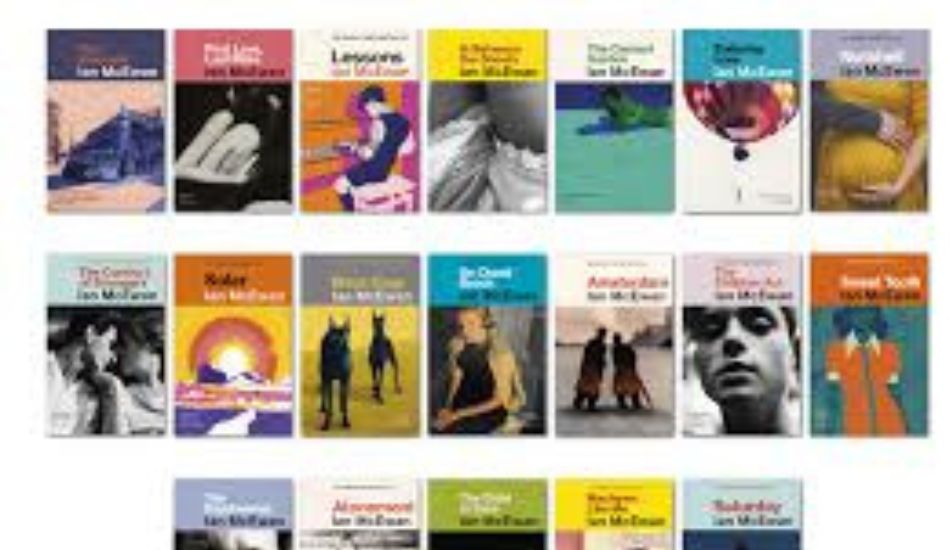
Below is a clear chronological list of Ian McEwan’s major works:
Novels
The Cement Garden (1978)
The Comfort of Strangers (1981)
The Child in Time (1987)
The Innocent (1990)
Black Dogs (1992)
The Daydreamer (1994)
Enduring Love (1997)
Amsterdam (1998)
Atonement (2001)
Saturday (2005)
On Chesil Beach (2007)
Solar (2010)
Sweet Tooth (2012)
The Children Act (2014)
Nutshell (2016)
Machines Like Me (2019)
Lessons (2022)
What We Can Know (2025)
Short-Story Collections
First Love, Last Rites (1975)
In Between the Sheets (1978)
Plays, Screenplays, & Nonfiction
The Imitation Game (1981) – Television drama
Or Shall We Die? (1983) – Libretto
The Ploughman’s Lunch (1985) – Screenplay
The Mind Harvesters (1987) – Teleplay
Several essays and critical pieces throughout his career
Ian McEwan’s Most Famous Works (Ranked by Influence)
Atonement
Amsterdam
The Child in Time
Enduring Love
Saturday
On Chesil Beach
Machines Like Me
These novels have earned global acclaim, adaptations, awards, and widespread scholarly attention.
Adaptations: Ian McEwan Movies Based on His Books
Many McEwan works have become major films:
Atonement (2007) – starring Keira Knightley & James McAvoy
Enduring Love (2004) – starring Daniel Craig
On Chesil Beach (2017) – starring Saoirse Ronan
The Children Act (2017) – starring Emma Thompson
The Cement Garden (1993) – directed by Andrew Birkin
These adaptations introduced McEwan’s storytelling to wider global audiences.
Ian McEwan Net Worth and Career Legacy
As of recent estimates, Ian McEwan’s net worth continues to grow through book sales, film adaptations, speaking engagements, and international editions. With over four decades of literary excellence, McEwan stands among the most influential British novelists of the modern era.
His brother Gregory McEwan has also contributed to the public understanding of the family’s background, adding further dimension to the author’s personal history.
Conclusion
Understanding Ian McEwan books in order allows us to see the remarkable evolution of a writer who reshaped contemporary literature. His work—from early psychological stories to global masterpieces—has inspired generations of readers. Whether exploring human emotion, morality, science, or history, McEwan delivers stories that linger in the mind long after turning the final page.
To explore more literary deep dives and author guides, visit Thegoted.com.