Harry Callahan: Pioneer of Modern American Photography
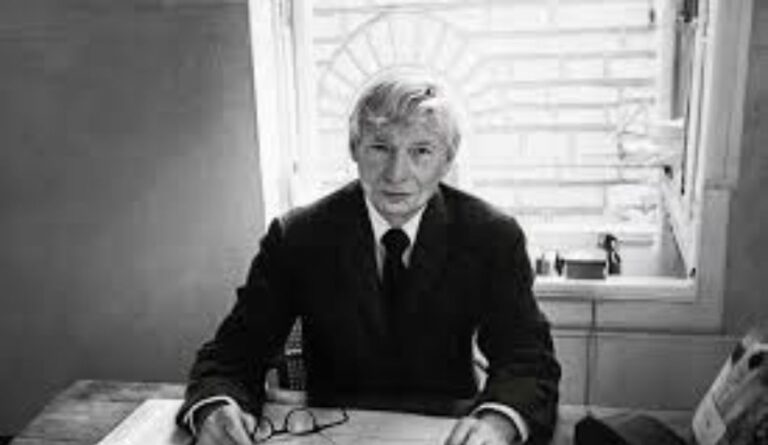
Harry Morey Callahan (October 22, 1912 – March 15, 1999) is widely regarded as one of the most influential American photographers of the 20th century. Known for his innovative approach to urban landscapes, portraiture, and experimentation with photographic techniques such as multiple exposure and color photography, Callahan’s work reshaped modern photography. His life, career, and personal relationships—including his long marriage to Eleanor Callahan—played a pivotal role in his artistic vision, leaving a lasting legacy for generations of photographers and art enthusiasts.
Who is Harry Callahan?
Born in Detroit, Michigan, Harry Callahan initially pursued engineering at Michigan State College, where he studied for three semesters. While his early studies did not directly lead him to photography, they laid the foundation for his analytical and structured approach to image-making. After leaving college in 1933, Callahan worked at Chrysler and later in a photographic laboratory at General Motors. It was during this time that he developed an interest in photography, experimenting with composition, light, and form in his spare time.
His pivotal encounter with photography came in 1941 when he attended a workshop led by Ansel Adams, the legendary American photographer. This experience inspired Callahan to commit himself to photography as a serious artistic pursuit. Though largely self-taught, Callahan’s work would later reflect the precision and formal rigor that his engineering background and experimental studies afforded him.
Education and Early Development
Although Callahan did not complete formal education in photography, he was deeply influenced by both European modernism and the burgeoning American photographic scene. In 1946, he was invited by László Moholy-Nagy, a former Bauhaus instructor, to join the Institute of Design (formerly the New Bauhaus) in Chicago. Here, Callahan refined his skills, learning to balance creativity with technical mastery. By 1949, he had become the head of the photography department, mentoring students and developing innovative teaching methods.
Callahan’s teaching philosophy emphasized experimentation, observation, and personal exploration. He encouraged students to use photography not merely as documentation but as a medium for expressing subjective experience, a principle that guided his own artistic output throughout his career.
Career and Artistic Contributions
Harry Callahan’s career spanned more than five decades, during which he explored multiple genres and techniques. He is known for his contributions to urban photography, portraiture, and abstract experimentation, as well as for pioneering color photography in a period when black-and-white dominated the art world.
Portraiture and Family
A central theme of Callahan’s work was his personal life, especially his wife Eleanor Callahan and their daughter Barbara. From the late 1940s onward, Eleanor became his most frequent subject, appearing in countless portraits that captured both her form and her essence. These intimate photographs often featured innovative uses of double exposure, motion blur, and framing, producing hauntingly poetic images.
Barbara, his daughter, also featured prominently in his work, particularly during the 1950s and 1960s. Callahan’s ability to merge the personal with the experimental made these portraits unique, elevating them from simple documentation to works of fine art.
Urban Landscapes and Chicago
Callahan’s time in Chicago was particularly productive. The city’s streets, architecture, and urban life became his laboratory. His photographs from this period reflect his interest in geometric forms, shadows, reflections, and abstract compositions. He often photographed everyday urban scenes, turning sidewalks, buildings, and pedestrians into studies of light and form. His Chicago works are widely recognized for their formal elegance and conceptual depth.
Photographic Style and Innovation
Callahan’s photographic style is characterized by:
Multiple and double exposures: creating complex, layered compositions.
Abstraction: transforming ordinary subjects into visually striking, formal explorations.
High contrast and geometric framing: emphasizing lines, shapes, and structural harmony.
Transition to color photography: In the late 1970s, Callahan embraced color photography, producing vivid and expressive works while maintaining his formal rigor.
He was not only a practitioner but also an innovator, constantly experimenting with new techniques, perspectives, and materials. His book Harry Callahan: The Photographer at Work documents his creative process and philosophy, highlighting his dedication to exploration and mastery.
Major Awards and Recognition
Callahan’s work earned him numerous awards and accolades:
Guggenheim Fellowship for Creative Arts, US & Canada, recognizing his outstanding contributions to photography.
Retrospective exhibitions at institutions including the Museum of Modern Art (MoMA) in New York (1976) and various international galleries.
His work is held in major collections such as The Art Institute of Chicago, National Gallery of Art, and Hirshhorn Museum.
Additional honors included recognition for lifetime achievement in photography and mentorship, reflecting his dual role as an artist and educator.
These accolades underscore Callahan’s profound influence on photography as a fine art and his lasting importance to the artistic community.
Personal Life and Legacy
Harry Callahan married Eleanor Knapp in 1936, a partnership that lasted until his death in 1999. Eleanor’s presence in his work was not only personal but also integral to his artistic development. Their daughter Barbara continued the family’s creative lineage.
Callahan’s teaching career, first at the Institute of Design in Chicago and later at the Rhode Island School of Design (RISD), allowed him to shape generations of photographers. At RISD, he developed the photography program and taught until his retirement in 1977, emphasizing creativity, exploration, and personal expression.
His approach to photography blended formal rigor with experimental freedom, influencing both contemporaries and future generations. His exploration of abstract urban landscapes, intimate portraiture, double exposure techniques, and color photography continues to inspire photographers and art enthusiasts around the world.
Notable Works and Exhibitions
Some of Callahan’s most recognized works include:
Chicago Street Scenes: abstracted cityscapes capturing geometry and human movement.
Portraits of Eleanor Callahan, exploring form, light, and intimacy.
Multiple exposure studies: combining urban and natural elements into surreal, abstract compositions.
Early color photography works, demonstrating his transition to vibrant modernism.
His exhibitions spanned major galleries in the U.S. and Europe, including MoMA, Pace Gallery, and numerous retrospective shows. His published books and portfolios provide deep insight into his philosophy and creative process, ensuring his work remains relevant in contemporary art discussions.
Conclusion
Harry Callahan’s life and work epitomize the fusion of personal experience, technical mastery, and artistic innovation. From his early experiments in Detroit to his iconic images of Chicago, his intimate portraits of Eleanor, and his groundbreaking color photography, Callahan transformed the medium of photography. His teaching, experimentation, and relentless pursuit of visual excellence have cemented his status as one of the most influential photographers of the 20th century. His legacy continues to inspire artists, students, and collectors worldwide.
For more detailed profiles and insights on influential photographers like Harry Callahan, visit Thegoted.com.